Stop Calling Yourself a Developer. You're a Builder.
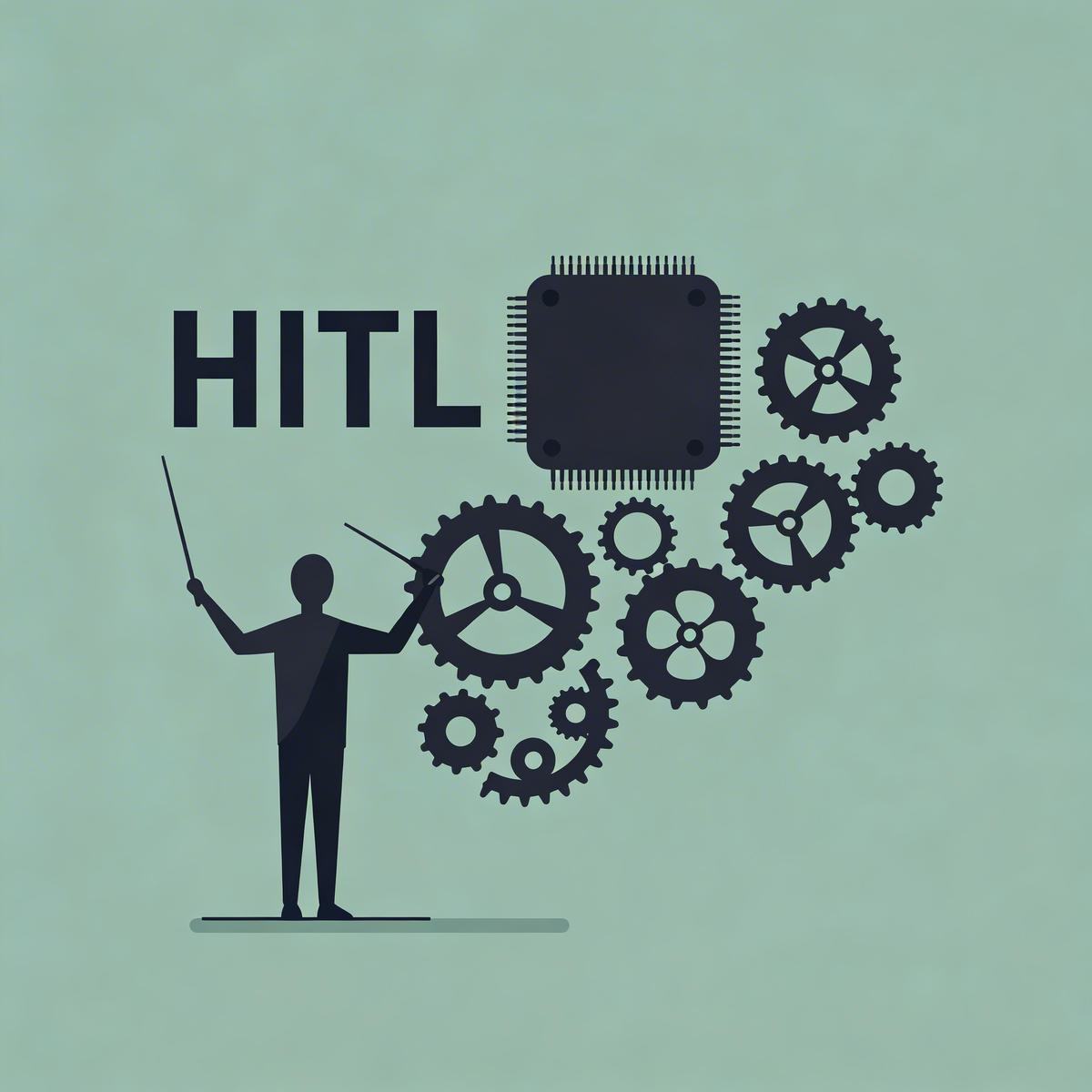
There's a shift happening in how software engineers and developers need to think about their work — and the ones who recognize it early are going to have a significant advantage over the ones who don't.
It's not about learning a new language or adopting the latest framework. It's a more fundamental identity shift: stop thinking of yourself as a programmer and start thinking of yourself as a maker. A builder. An orchestrator or conductor. Someone whose job is to create things. The specific tools you use to create them? Increasingly beside the point.
The Agents Are Already Here
When people talk about AI in the context of software development, there's often a sense that the really transformative stuff is still coming — that we're in a warm-up phase before the real disruption hits. I'd push back on that.
Coding agents are here now. And I mean agents in the precise sense of the word: systems that operate with genuine autonomy on your behalf, without requiring step-by-step prompting or hand-holding. They can take a problem, break it down, write code, debug it, iterate, and deliver results — while you're doing something else.
This isn't science fiction. It's Tuesday.
If you're still approaching AI as a smarter autocomplete — a tool that helps you write a function faster — you're underutilizing what's available to you right now. The shift from AI as assistant to AI as agent is not a subtle one. It changes the nature of your role.
The Intern Analogy
Here's a mental model that I find genuinely useful: think of AI agents as a team of very capable interns.
They're fast. They're tireless. They can handle a surprisingly wide range of tasks with a reasonable level of competence. They scale your output in ways that weren't possible before. Bring on a team of capable interns and suddenly you can move on multiple workstreams simultaneously, cover more ground, deliver more.
But here's the part that matters: bringing on interns doesn't relieve you of your responsibility.
When you onboard a group of junior resources — interns, entry-level engineers, new hires — you don't hand them a project and walk away. You direct the work. You review the output. You course-correct when they go sideways. You catch the things they miss because they don't yet have the context, the judgment, or the experience to catch them themselves. And ultimately, you own the result.
The same applies here. AI agents can execute. They can move fast and produce a lot. But the prompting, the vetting, the interpretation, the judgment about what's right and what isn't — that's still on you. That's the human in the loop. And it's not a temporary condition we're waiting to engineer away. It's the job.
+AI vs. AI+
There's a distinction I want to draw here because I think it clarifies where most organizations are today versus where they need to get to.
+AI is the optimization mindset. You take the work you already do — your existing workflows, your deliverables, your processes — and you ask: where can I apply AI to make this faster or easier? It's additive. It reduces friction. It's genuinely valuable and it's the right place to start.
But it's only the starting point.
AI+ is the transformation mindset. Here, you're not just streamlining what already exists — you're rethinking what your role actually is. If AI can handle the execution of a large portion of what used to fill your day, what does that free you up to do? Where can you add value that the agent can't? What does the work look like when the time you used to spend writing and debugging and compiling is now available for higher-order thinking, strategy, client insight, creative direction?
That's the question AI+ is asking. And the organizations — and individuals — who start asking it now are going to be operating at a fundamentally different level than those who are still treating AI as a slightly better search engine.
This Isn't Just a Tech Story
One thing I want to be clear about: this shift doesn't only affect engineers and developers. That's just where it tends to show up first.
Think back to the early days of blogging and content management systems. Initially, that was a developer thing — a technical community finding ways to streamline workflow and publishing. Then it spread. Platforms got easier. The barrier to entry dropped. What started as a niche technical practice became something anyone could do, regardless of technical background. The disruption radiated outward from the center.
AI is following the same pattern, just at a dramatically higher velocity. The acceleration is the new variable.
Brand managers, strategists, operations leaders, HR teams, finance — every discipline is going to feel this. The question isn't whether your role will be affected. It's whether you'll be ahead of it or behind it when it arrives.
What "Human in the Loop" Actually Means
The phrase "human in the loop" gets thrown around a lot, and I think it sometimes gets reduced to a vague reassurance — don't worry, there's still a human involved somewhere. That's not what I mean by it.
Human in the loop is an active posture. It means you know how to ask the right questions — prompting is a real skill, and it matters. It means you know how to evaluate the outputs you get — not just whether the code runs, but whether it's the right solution to the right problem. And it means you know how to take those results and present them, contextualize them, stand behind them.
Those three things — ask, vet, present — are where the value of human expertise lives in an AI-augmented world. The execution layer is increasingly handled. The judgment layer is not.
The Goal Is Not to Do More with Less
I want to end on this because I think it's the most important framing shift of all.
The conversation about AI in the workplace often defaults to a productivity or cost lens: how do we cut headcount, reduce hours, trim budgets? That's the wrong question, and it leads to the wrong outcomes.
The right question is: how do we scale what we're capable of? How do we take the talent and insight and domain expertise we already have and amplify it — so we can serve clients better, move faster, build more, and deliver more value than was previously possible with the same team?
That's not doing more with less. That's doing a lot more with what you have.
The organizations that approach AI with that mindset — as a force multiplier for human capability, not a substitute for it — are the ones that are going to compete most effectively in the years ahead.
Stay in the loop. Stay postured. The makers are going to have a very good run.